Family and Domestic Violence affects people across all cultures and backgrounds in Australia. For many migrants and temporary visa holders, the challenges are often compounded by visa dependency, language barriers and social isolation.
Our firm has seen an increase in cases where temporary or partner visa holders feel trapped in abusive relationships due to fear of deportation, financial hardship, or lack of community support.
About DV
Domestic Violence has many shapes,and one must not link this to physical harm only. Under section 8 of the Domestic and Family Violence Protection Act (Qld) 2012, domestic violence includes any behaviour or pattern of behaviour — that is physically, sexually, emotionally, psychologically, economically, threatening, coercive, or that controls or dominates another person, causing them to fear for their safety or wellbeing.
This can include:
➢ Physical or sexual abuse;
➢ Emotional or verbal intimidation;
➢ Financial control or restriction of access to money;
➢ Damage to property or threats to harm pets;
➢ Surveillance or tracking without consent (such as monitoring phone messages, emails or social media); and
➢ Behaviour that isolates, manipulates or coerces a person into compliance.
The law recognises that domestic violence often occurs as a pattern of ongoing control, rather than a single incident. Importantly, the Court can make a Domestic Violence Order (DVO) if any of the above elements are present as per the Act.
When Migration Status and Domestic Violence Intersect
For many visa holders, particularly those on temporary partner visas, the situation of DV is even more complex.Victims often feel trapped because their visa status depends on their partner’s sponsorship. The visa deportation threats from their partners/sponsors represent an act of violence.Under the Migration Regulations 1994 (Cth), however, a person who experiences domestic or family violence may still be eligible for permanent residency, even if the relationship ends, provided they can show evidence of family violence.The expansion of the family violence provisions under the Migration Regulations offers important protection to visa holders who fear that their visa may be refused or cancelled if their sponsoring partner withdraws their support.
This protection acknowledges that no person should be forced to stay in an abusive relationship to maintain their visa.
The Family Violence Provisions are available to applicants for:
– Subclass 309 – Partner (Provisional);
– Subclass 100 (Partner) Visa;
– Subclass 820 (Partner) Visa;
– Subclass 801 (Partner) Visa;
– Subclass 858 (Global Talent) Visa – for secondary applicant as a member of the primary applicant’s family unit;
– Others – TBA
The Cultural and Emotional Barriers
In many communities, especially those from South Asian, Middle Eastern, or culturally and linguistically diverse (“CALD”) backgrounds, victims face deep cultural barriers to speaking up.
Family and community expectations, fear of shame, and a desire to “keep the family together” often stop victims from reporting abuse. In some cultures, marriage is not seen as just a union between two people, but between two families and leaving an abusive relationship can feel like dishonouring both. As a result, many victims continue to suffer in silence, unaware that they are trapped in a cycle of coercion and control and that the law provides them with options and protection.
Australia is a multi-cultural nation with more than 1 in 4 of the population born overseas and more than 1 in 5 speaking a language other than English. According to the Australian Institute of Health and Welfare (AIHW, 2024), people from CALD backgrounds are particularly vulnerable to exploitation when their legal status depends on their partner. Many are threatened with visa cancellation, dowry abuse, or deportation, making it even harder to seek help or report abuse.
Our firm regularly assists clients facing this situation. We help victims navigate both the legal protection process (including Domestic Violence Orders) and migration implications ensuring safety and continuity of lawful status in Australia.
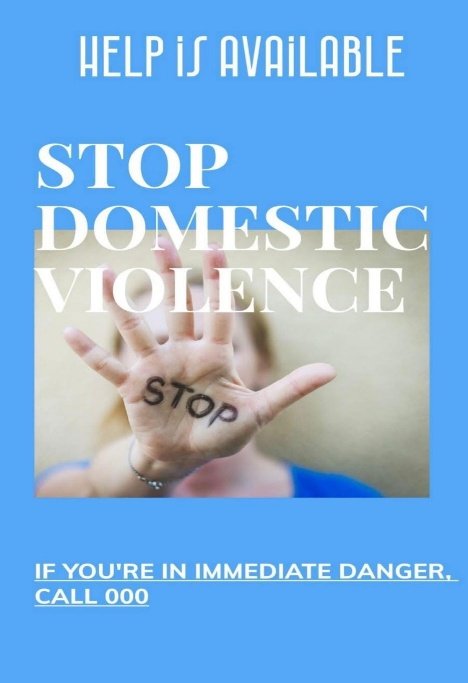
If you are experiencing violence or are in immediate danger, call 000. For more information, please click on the below link and read the departmental notes on DV:
https://immi.homeaffairs.gov.au/visas/domestic-family-violence-and-your-visa